



The National Highway Traffic Safety Administration has issued a safety recall campaign for certain 2026 Jeep Wrangler models due to a manufacturing defect involving the rear seat child restraint anchorage system. This safety campaign, designated under recall number 26V224000, specifically impacts the second-row, right-side seat frame. If you drive a 2026 model, verifying whether your vehicle is affected is a critical step in ensuring the safety of your youngest passengers.
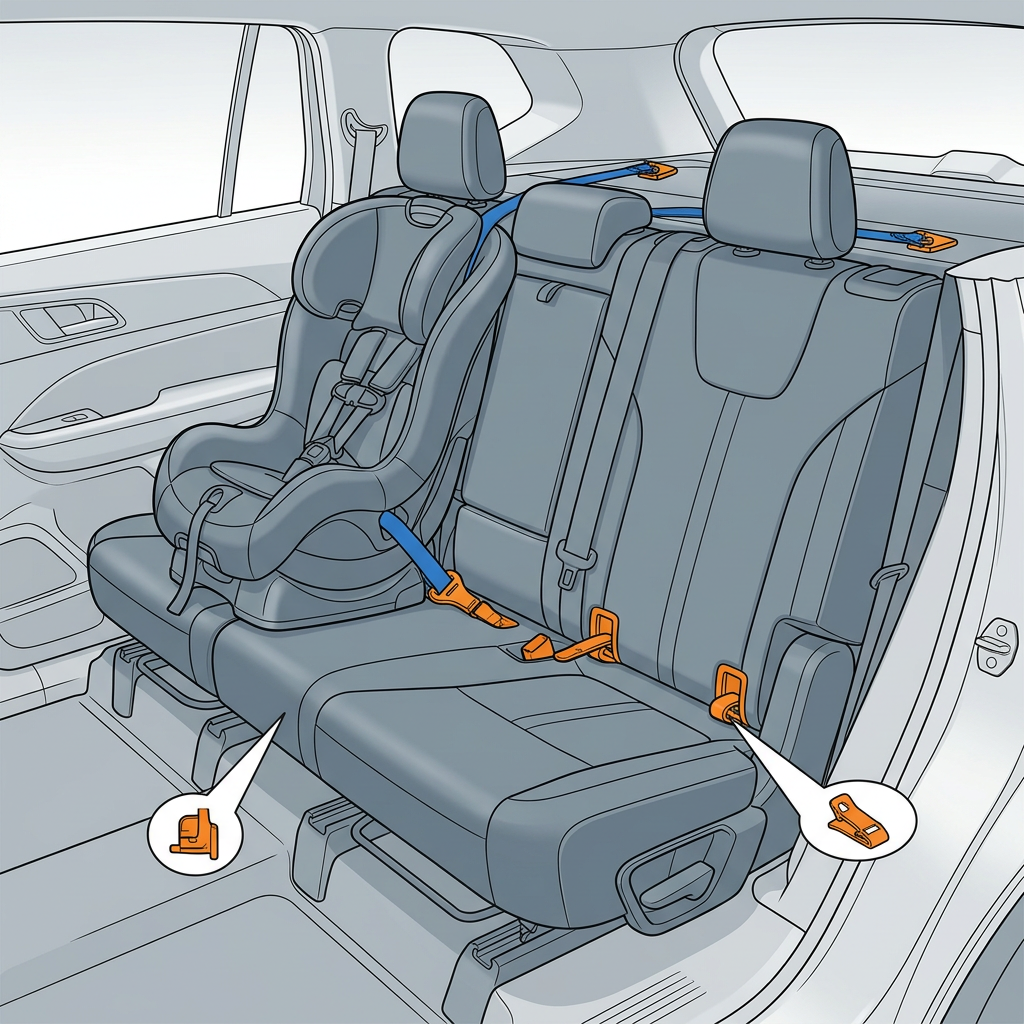
A child safety seat relies on three points of contact to remain secure during a sudden stop or collision: the lower LATCH anchors and the top tether strap. When a vehicle's built-in tether anchor is structurally compromised, the child seat may not remain fully secured in a crash. This failure can result in excessive forward movement of the child safety seat, dramatically increasing the risk of occupant injury. Because this issue prevents the vehicle from meeting the strict guidelines of Federal Motor Vehicle Safety Standard number 225, a manufacturer-backed remedy is required.
Our factory-trained technicians are prepared to inspect your vehicle and perform the necessary structural repairs. If you have questions about whether your vehicle is part of this safety campaign, you can reach out to our service advisors by giving our team (762) 365-0910 a call. For those driving in from nearby areas, visiting our Waynesboro service department allows you to speak directly with our certified technicians and arrange a convenient time for your recall inspection.
Table of Contents
- The Technical Issue Behind the Wrangler Rear Seat Tether Welds
- What Our Certified Service Team Does to Repair Your Wrangler Tether Anchors
- Safety Standards and Cabin Dimensions: 2026 Wrangler vs Ford Bronco
- Wrangler Safety Technology: Steering Design and Lane-Keep Assist Dynamics
- Common Questions About Jeep Wrangler Recalls and Child Seat Safety
- Restoring Your Peace of Mind on the Road
The Technical Issue Behind the Wrangler Rear Seat Tether Welds
The root cause of this safety recall lies in the manufacturing process of the second-row right-side seatback frame. During assembly, the child seat tether anchor welds on this specific portion of the frame may have been applied with insufficient penetration or coverage. These sub-standard welds mean the structural connection between the anchor loop and the seatback frame is weaker than federally mandated safety thresholds require.
In a collision, the physical forces exerted on a forward-facing child seat are immense. The top tether anchor is designed to withstand these high-tension forces to prevent the top of the child seat from tipping forward. If the welds holding the anchor to the frame are weak, they can shear or separate entirely under stress. This weld failure compromises the entire restraint system, allowing the child seat to shift violently, which can lead to severe head and neck injuries for a child occupant.
This structural defect is entirely distinct from other recent campaigns, such as the electric-hydraulic power steering pump connection issue that affected older model years. While that steering pump problem involved electrical resistance and overheating risks, the child seat anchor recall is strictly a mechanical and structural weld issue. It requires a physical inspection of the seatback frame rather than diagnostic scan tools or electrical testing.
What Our Certified Service Team Does to Repair Your Wrangler Tether Anchors
When you bring your vehicle to our dedicated maintenance facility, our factory-trained technicians will perform a comprehensive inspection of the second-row right-side seatback frame. If the welds on your vehicle's tether anchor are determined to be insufficient, we will replace the affected rear seatback frame or anchor assembly. This repair is performed entirely free of charge to the vehicle owner, as is standard for all safety recall campaigns.
To ensure your vehicle is returned to factory specifications, our technicians use specialized tools and original equipment manufacturer parts. We do not attempt to re-weld the existing damaged components in our shop; instead, we replace the structural frame with a verified, factory-tested assembly. If your vehicle requires any additional maintenance during its visit, you can easily order parts such as cabin air filters or wiper blades directly through our department to maximize your appointment time.
While waiting for your scheduled appointment, we highly recommend utilizing the lower LATCH anchors combined with the vehicle's seat belt system to secure any infant carriers or booster seats, though forward-facing seats must have a verified top tether for complete protection. You can secure your appointment slot online by using our portal to schedule service at a time that fits your daily routine, ensuring your vehicle's safety systems are fully restored without unnecessary delay.
Safety Standards and Cabin Dimensions: 2026 Wrangler vs Ford Bronco
When managing family transportation and child seat installations, cabin dimensions play a major role in how easily you can access and secure child safety seats. A common question among off-road enthusiasts is how the interior space of the 2026 Jeep Wrangler compares to the Ford Bronco. The Ford Bronco features a wider cabin footprint, which provides more shoulder and hip room for rear-seat passengers. This extra width makes it slightly easier to install bulky, side-by-side child seats in the second row compared to the narrower, more traditional cabin dimensions of the Wrangler.
However, the Wrangler remains highly competitive when it comes to vertical space and rear-seat entry. For families navigating the agricultural areas and rolling terrain around Hephzibah, the Wrangler's boxy door openings and upright seating position make lifting heavy child seats into the second row highly manageable. The trade-offs between these two off-road models generally come down to lateral shoulder room versus vertical clearance and ease of access.
In terms of overall safety ratings, the 2026 Jeep Wrangler 4-door built after October 2025 has shown notable improvements. In evaluations conducted by the Insurance Institute for Highway Safety, the updated Wrangler remained upright during the driver-side small overlap front crash test, earning an acceptable small overlap rating. Jeep accomplished this by modifying the frame rail to reduce the likelihood of tipping in frontal crashes. However, evaluations also noted a continuing risk of injury to the front passenger's right foot and leg during similar passenger-side small overlap impacts.
Wrangler Safety Technology: Steering Design and Lane-Keep Assist Dynamics
The mechanical design of the 2026 Jeep Wrangler is optimized for extreme off-road capability, which directly influences the types of driver-assist technologies available on this platform. Unlike many modern crossover SUVs that utilize electronic rack-and-pinion steering systems, the Wrangler retains a traditional recirculating-ball steering box. This heavy-duty setup is engineered to withstand the harsh impacts of rock crawling and trail riding, but its mechanical nature limits certain automated steering interventions.
Because of this traditional steering box design, the 2026 Wrangler does not offer active lane-keep assist or lane departure steering intervention. These systems require precise, rapid electronic steering rack adjustments that are incompatible with the Wrangler's rugged steering gear. Instead, the Wrangler focuses its safety suite on passive and active monitoring systems, offering optional features such as:
- Blind-spot monitoring to track vehicles in your hard-to-see quarters
- Rear cross-traffic alert for backing out of busy parking spaces
- Rear parking sensors to guard against low-visibility obstacles
For daily driving along the busier commuter corridors of Augusta, drivers will notice that the Wrangler handles more like an authentic, classic truck than a soft-riding crossover. While its steering requires more active driver attention on the highway, this design is what allows the Wrangler to conquer rugged terrain that would sideline less durable vehicles. Maintaining this steering system with regular fluid checks and alignment services at our shop is key to preserving its long-term road manners.
Common Questions About Jeep Wrangler Recalls and Child Seat Safety
Q: What is the 2026 Jeep Wrangler child seat tether anchor recall about?
A: This recall involves potentially insufficient welds on the second-row, right-side child seat top tether anchor. In a crash, these weak welds can fail, allowing the child seat to move forward excessively and increasing the risk of occupant injury.
Q: How do I verify if my specific 2026 Wrangler is affected by this recall?
A: You can check your vehicle's status by entering your 17-character Vehicle Identification Number on the official NHTSA recall lookup tool, or you can contact our service desk directly. We can instantly run your VIN through our database to see if your vehicle has any open safety campaigns.
Q: Can I still use my child safety seat before the recall repair is completed?
A: While you can use the vehicle's seat belts to secure a child seat base, forward-facing child seats require a top tether to prevent forward head movement in a crash. We recommend contacting our service team immediately to prioritize this free structural repair.
Q: Where can I get my child seat installation inspected after the repair in the Waynesboro area?
A: After our technicians complete the recall repair, you can have your installation verified by a certified Child Passenger Safety Technician at our dealership or through local public safety departments. Our team will ensure the seat is correctly anchored to the newly installed frame assembly.
Restoring Your Peace of Mind on the Road
Ensuring the safety of your family is our top priority at Paul Thigpen CDJR Waynesboro. If your 2026 Jeep Wrangler is affected by the child seat tether anchor recall, our factory-trained service technicians are ready to perform the necessary structural repairs quickly, professionally, and entirely free of charge. We use only genuine OEM parts to guarantee that your vehicle meets all federal safety standards.
Do not delay when it comes to the safety of your passengers. Contact our service department today to verify your vehicle's recall status and schedule your repair appointment. For drivers who need to confirm their recall details or wish to schedule a multi-point vehicle inspection, you can easily reach our service advisors by calling (762) 365-0910. If you prefer to drop by and speak with our service coordinators in person, we are located at 480 US, Waynesboro, GA 30830, where we are fully equipped to handle all of your maintenance, parts, and recall service needs.