




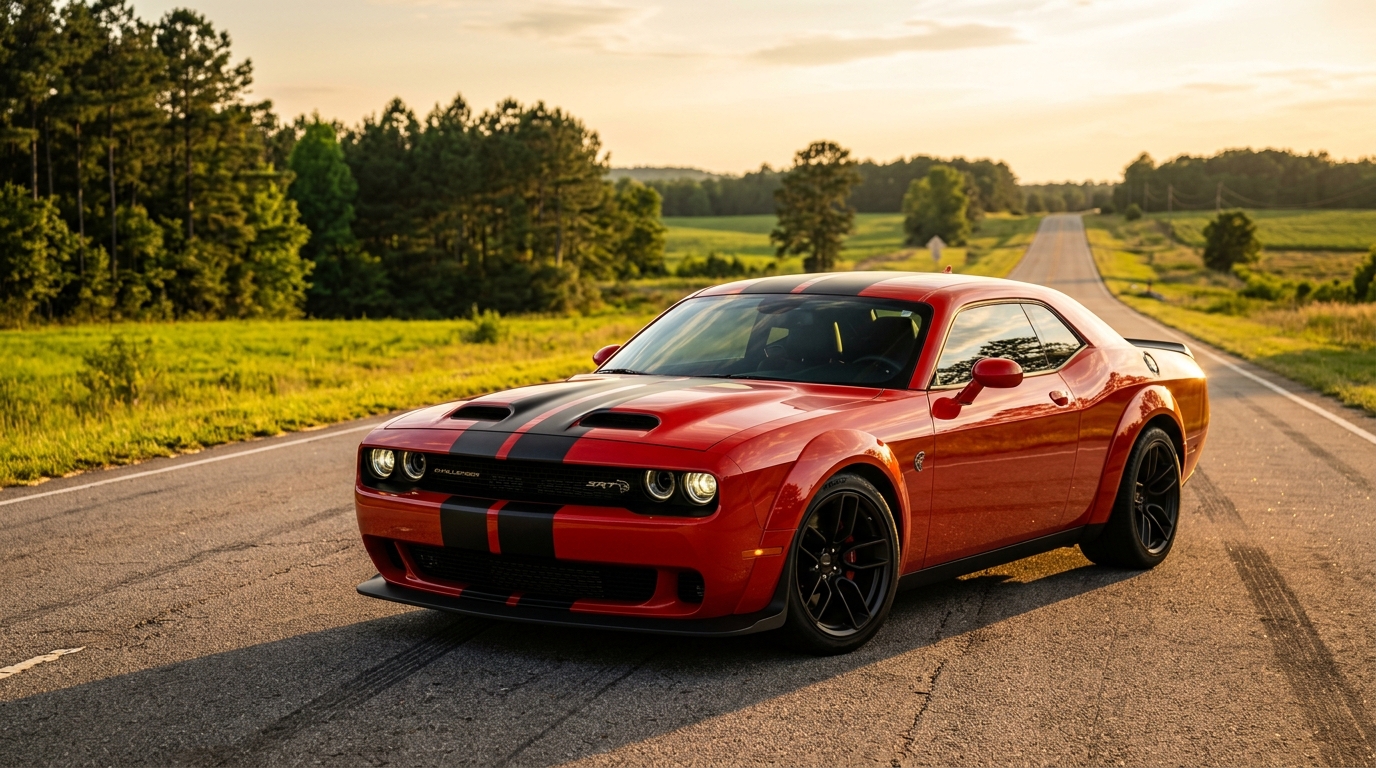
Finding the Perfect Dodge Challenger Near You
The final production run of the Dodge Challenger concluded in December 2023, marking the end of a legendary era for the American muscle coupe. For shoppers in Waynesboro, this means the window to secure a late-model, low-mileage example is narrowing as these vehicles transition from new showroom floors to the pre-owned market. Because the Challenger was built on a larger platform than many of its rivals, it offers a specific blend of straight-line speed and highway comfort that makes it a popular choice for local drivers who frequent the open stretches of Highway 25.
When you are searching for a vehicle with this much performance history, the buying process is about more than just finding the lowest price. It involves verifying the vehicle's history, especially for high-output models like the Scat Pack or Hellcat, which may have seen track use. Our team focuses on sourcing well-maintained examples that have spent more time on scenic weekend drives than on the drag strip. If you are ready to see what is currently available on our lot, you can find our showroom address easily and stop by for a personal walkthrough of our current muscle car selection.
The transition to the next-generation Dodge Charger, which is set to arrive in late 2024, has only increased the demand for the classic HEMI-powered Challenger. Many enthusiasts are looking to own a piece of history before the lineup shifts toward electric and multi-energy platforms. If you have questions about a specific trim level or want to know which models just arrived in our inventory, give us a quick call and we can provide the most current details.
Table of Contents
- Deciding on the Right Dodge Challenger Engine Options
- Comparing Muscle Coupe Cabin Space and Rear Seat Legroom
- Navigating Used Dodge Challenger Pricing and Financing Options
- Understanding Dodge Challenger Insurance Costs and Long-Term Ownership Value
- How to Filter Our Inventory to Find Your Dream Muscle Car
- Quick Answers About the Dodge Challenger
- Start Your Muscle Car Journey at Paul Thigpen CDJR Waynesboro
Deciding on the Right Dodge Challenger Engine Options
Selecting the right powertrain for a Challenger depends entirely on how you plan to use the car, as the performance gap between the entry-level and top-tier models is substantial. The base 3.6-liter Pentastar V6 serves as the starting point, delivering 303 hp and 268 lb-ft of torque. This engine is the only one in the lineup that can be paired with an All-Wheel Drive system, making it a practical choice for those who want the muscle car aesthetic but need extra traction for rain-slicked roads or light gravel paths found around Hephzibah.
Moving into the V8 family introduces the classic American rumble that defined the brand for decades. The 5.7-liter HEMI V8 found in the R/T trim produces 372 hp and 400 lb-ft of torque, offering a significant jump in acceleration without the extreme maintenance requirements of the supercharged models. For those seeking even more naturally aspirated power, the 6.4-liter HEMI V8 (also known as the 392) bumps output to 485 hp, allowing the car to reach 60 mph in the mid four-second range.
The pinnacle of the lineup consists of the supercharged variants, which transformed the Challenger into a global performance icon. The standard SRT Hellcat utilizes a supercharged 6.2-liter HEMI V8 to produce 707 hp and 650 lb-ft of torque. If that isn't enough, the Hellcat Redeye and Jailbreak editions pushed those figures even higher, with the Jailbreak reaching a staggering 807 hp. These models are engineered with heavy-duty cooling systems and high-performance brakes to manage the immense heat and speed generated by the supercharger.
Comparing Muscle Coupe Cabin Space and Rear Seat Legroom
One of the most common surprises for shoppers during a test drive is just how spacious the Challenger is compared to other sports coupes. While many competitors feel cramped, the Challenger was designed with a much larger footprint, allowing it to function as a legitimate grand tourer. This extra size translates directly into the cabin, where the driver and front passenger enjoy significantly more shoulder and hip room than they would in a more compact rival.
The difference is even more pronounced when you look at the rear seating. The Challenger provides about 33 inches of rear legroom, which is a massive advantage over the 29 inches typically found in the Ford Mustang. While the back seat of most muscle cars is reserved for cargo or very small children, the Challenger can actually accommodate adult passengers for shorter trips. This makes it a much more viable option for someone who needs a performance car that can still handle a quick trip to the Augusta Riverwalk with friends.
In addition to passenger space, the trunk capacity is another area where this model leads its class. With roughly 16 cubic feet of cargo volume, the Challenger offers more storage space than many mid-size sedans. You can easily fit a full set of golf clubs or several large suitcases, a feat that is nearly impossible in most other performance-oriented two-door vehicles. This practicality is why many local buyers choose the Challenger as their primary vehicle rather than just a secondary "toy" for the weekends.
Navigating Used Dodge Challenger Pricing and Financing Options
As the Challenger moves into its post-production phase, the used market has become the primary destination for buyers. Pricing for these vehicles can vary wildly based on the engine and the rarity of the trim. Early-generation models or high-mileage V6 versions can often be found for under $20,000, while late-model SRT Hellcats or limited-edition Last Call trims can still command prices well above their original MSRP. Collectors often look for specific "numbered" editions or unique colors like Plum Crazy or Sublime Green, which tend to hold their value better over time.
When you are ready to move forward with a purchase, our finance team can help you navigate the different paths to ownership. Even for high-performance vehicles, we work with a variety of lenders to find competitive rates that fit your budget. You can save time at the dealership by choosing to prequalify online through our secure portal. This allows you to shop with a clear understanding of your buying power before you even set foot on the lot.
Because our inventory changes frequently, we recommend checking back often to see the latest arrivals. We prioritize quality in our selection of used vehicles, ensuring that every muscle car we sell has undergone a thorough inspection. Whether you are looking for a fuel-efficient V6 for your daily commute or a high-torque V8 for weekend cruises, we can help you find the right balance of price and performance.
Understanding Dodge Challenger Insurance Costs and Long-Term Ownership Value
Insurance for a Dodge Challenger is typically higher than a standard sedan, primarily because of the vehicle's performance capabilities and repair costs. On average, liability coverage can run around $138 per month, while full coverage often averages near $260 per month. These rates are influenced by the specific trim level; insuring a base SXT is generally more affordable than covering a Hellcat, which carries a much higher replacement value and more expensive specialized parts.
Long-term ownership value remains strong for the Challenger, especially now that the HEMI V8 has been retired from the lineup. Vehicles that are kept in original condition with documented service histories are expected to be highly sought after by enthusiasts for years to come. To help make your next purchase more affordable, you can value your trade-in through our website. Getting a fair price for your current vehicle is one of the best ways to lower the overall cost of stepping into a Challenger.
Reliability for the Challenger has been consistent throughout its final decade of production. The 3.6-liter V6 and 5.7-liter V8 are both well-known engines that have been used across the Stellantis lineup for years, meaning parts are readily available and most technicians are very familiar with their architecture. When you buy a Challenger, you are investing in a platform that has been refined over nearly 15 years of production, resulting in a robust and predictable ownership experience.
How to Filter Our Inventory to Find Your Dream Muscle Car
Finding the exact Challenger you want requires a strategic approach to searching our inventory. Because there were so many different trim lines—SXT, GT, R/T, R/T Scat Pack, and the various SRT models—using the right filters is essential. We recommend filtering by engine type first to narrow down your performance expectations, then looking at the transmission. While the TorqueFlite eight-speed automatic is the most common, many V8 enthusiasts specifically hunt for the Tremec six-speed manual for a more traditional driving experience.
When you browse our current vehicle inventory, you can also filter by specific "packages." For example, the Plus Package often adds premium Nappa leather and heated seats, while the Performance Handling Group adds upgraded suspension and Brembo brakes to lower trims. If you see a car that catches your eye, don't hesitate to reach out. You can get directions to our Waynesboro location or give our team a quick call to verify that the vehicle is still available for a test drive.
Quick Answers About the Dodge Challenger
Q: Which Dodge Challenger engine is best for daily driving and fuel economy? The 3.6-liter Pentastar V6 is the most practical choice for a daily driver, offering an EPA-estimated 19 mpg city and 30 mpg highway. It provides a smooth ride and enough power for highway merging while keeping fuel costs significantly lower than the V8 alternatives.
Q: Does the Dodge Challenger offer an All-Wheel Drive option? Yes, but it is exclusively available on the SXT and GT trims equipped with the V6 engine. This system is designed to provide extra confidence during heavy Georgia rainstorms or on the unpaved roads often found in rural areas like Hephzibah.
Q: What is the 0-60 mph time for the high-performance Hellcat models? The standard SRT Hellcat can reach 60 mph in about 3.6 seconds, while the Hellcat Redeye can drop that time to approximately 3.4 seconds. These figures are achieved using specialized launch control systems and high-performance tires.
Q: How does the Challenger's rear seat space compare to other muscle cars? The Challenger is widely considered the most "livable" muscle car because it offers 33 inches of rear legroom. This is roughly 4 inches more than the Ford Mustang, making the back seat actually usable for adult passengers on short trips.
Q: What should I look for when buying a used Dodge Challenger? It is important to check the vehicle history for any signs of heavy track use or modifications. We recommend looking for cars with consistent service records and checking the condition of the tires and brakes, as these high-performance components can be expensive to replace.
Start Your Muscle Car Journey at Paul Thigpen CDJR Waynesboro
Whether you are looking for the raw power of a HEMI V8 or the iconic styling of a V6 cruiser, our team is here to help you find the right match. The Dodge Challenger remains a standout choice for drivers who want a vehicle that combines heritage, performance, and everyday practicality. We invite you to explore our selection, speak with our finance experts, and experience the thrill of American muscle for yourself. Visit us today or browse our online tools to take the first step toward putting a Challenger in your driveway.
Keep Your Vehicle Running Strong
Keep your vehicle performing at its best with our service team: