




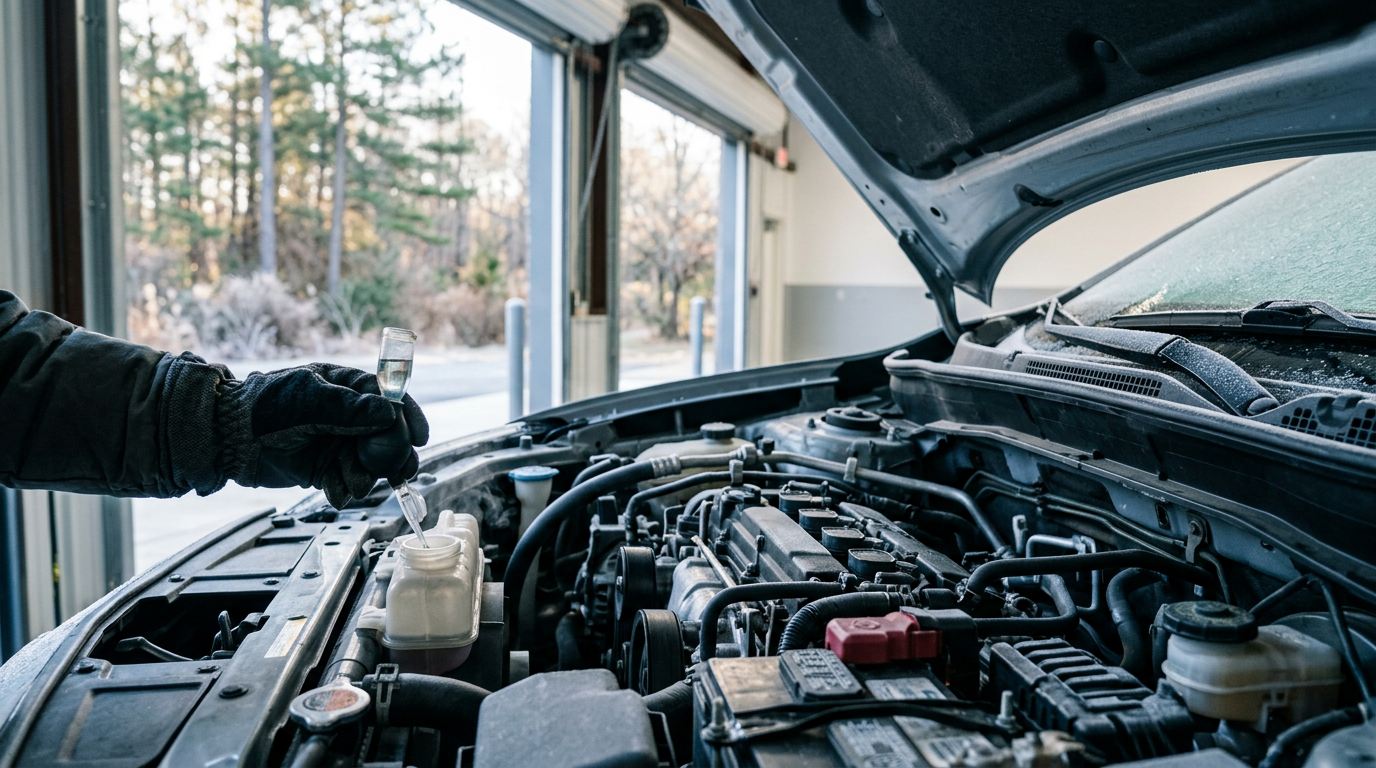
Essential winter maintenance for cold weather requires testing battery capacity, inspecting cooling system antifreeze strength, adjusting tire pressure for dropping ambient temperatures, switching to low-viscosity motor oil, replacing worn windshield wiper blades with winter-grade assemblies, and verifying brake system operation. Addressing these core electrical, fluid, and traction components protects engine vitals, prevents cold-start failures, and ensures safe handling during severe temperature drops.
As ambient temperatures decrease, engine components experience heightened mechanical stress. Motor oil thickens, reducing initial circulation speed across cylinder walls, while internal chemical reactions inside lead-acid batteries slow down significantly. At the same time, rubber compounds in standard tires harden, which reduces road grip on icy or wet asphalt. A complete winter maintenance regimen addresses each of these vulnerabilities before freezing conditions lead to unexpected mechanical failure.
A comprehensive cold-weather inspection begins with a thorough fluid analysis. Technicians check the coolant-to-water ratio using a hydrometer to confirm protection down to sub-zero temperatures. A 50/50 mixture of engine coolant and distilled water prevents fluid freezing inside the radiator and engine block, which could otherwise crack internal casting walls. Simultaneously, windshield washer reservoirs are drained and refilled with winter-grade washer fluid containing anti-ice additives to keep spray nozzles clear.
Traction and braking systems also require dedicated attention before cold conditions set in. Driving across the gently rolling hills and rural routes around Waynesboro places distinct demands on tires and brake pads during slick morning frost. Inspecting brake pad thickness, rotor surfaces, and tire tread depth ensures predictable stopping distances. To have your vehicle inspected by factory-trained technicians, visit our service department at 480 US Highway 25 or give our service team a quick call to set up an appointment.
Table of Contents
- What Specs and Features Are Included in a Typical OEM Cold Weather Package?
- How Cold Temperatures Affect Car Batteries, Alternators, and Heated Accessories
- What Engine Oil Viscosity and Block Heating Setup Work Best in Cold Weather?
- How Dedicated Winter Tires Perform and How to Maintain Correct Inflation
- How Much Does It Cost to Winterize a Vehicle for Cold Weather Operation?
- Frequently Asked Cold Weather Car Care Questions
- Prepare Your Vehicle for Cold Weather at Paul Thigpen CDJR Waynesboro
What Specs and Features Are Included in a Typical OEM Cold Weather Package?
A typical OEM cold weather package combines heavy-duty electrical hardware, thermal comfort equipment, and specialized glass heating elements designed to maintain vehicle driveability in low temperatures. Common factory inclusions consist of heated front seats, a heated steering wheel, heated power side mirrors, windshield wiper de-icer grids, high-output alternators, and heavy-duty batteries with elevated Cold Cranking Amps.
Automakers engineer factory cold-weather packages to solve the dual challenges of driver cabin comfort and mechanical reliability. Equipment packages such as the factory Cold Weather Group outfit popular models with integrated electrical heating circuits. For example, vehicles equipped with a 3.6L Pentastar V6 engine paired with a 9-speed automatic transmission feature revised thermal management software to help the engine reach optimal operating temperature faster after a cold start.
The major features integrated into comprehensive cold-weather factory packages include:
- Thermal Cabin Comfort: Multi-stage heated front and rear seats alongside a heated steering wheel that provides targeted warmth without placing heavy demand on engine coolant temperature during warm-up.
- Glass and Mirror Defrosting: Heated exterior side mirrors and lower windshield heating grids that melt ice buildup along wiper resting zones.
- Upgraded Electrical Systems: High-capacity batteries rated for maximum Cold Cranking Amps and heavy-duty alternators engineered to support continuous high-amp accessory usage.
- Engine Pre-Heating Hardware: Integrated engine block heaters with heavy-duty power cords for extreme cold environments.
Vehicles like the 2026 Jeep Grand Cherokee featuring a 2L engine and TorqueFlite® automatic transmission demonstrate how modern all-wheel-drive systems coordinate with heated cabin accessories to maintain capability in cold conditions. For drivers looking to upgrade their vehicle for winter driving, vehicle owners can order genuine OEM cold weather parts directly through our specialized department.
How Cold Temperatures Affect Car Batteries, Alternators, and Heated Accessories
Cold weather severely compromises automotive battery performance because freezing temperatures slow down the internal chemical reactions necessary to produce electrical current. At 32°F, a standard automotive lead-acid battery loses roughly 20 percent of its starting capacity, and at 0°F, available cranking power drops by up to 60 percent while the engine requires significantly more amperage to turn over dense motor oil.
Our service technicians routinely perform conductance load testing on vehicle batteries during pre-winter service visits to evaluate internal resistance, plate degradation, and remaining reserve capacity. When a battery ages past three to five years, cold weather frequently exposes underlying wear, leading to sudden click-no-start conditions on cold mornings. Testing the battery before temperatures drop allows owners to replace weak units before complete electrical failure occurs.
The vehicle charging system also operates under maximum stress during cold weather. The alternator must replenish battery charge while simultaneously powering high-draw accessories, including rear window defrosters, cabin blower fans, headlights, and seat heaters. While heavy-duty rear defrost circuits draw substantial amperage, a heated steering wheel draws minimal electrical power—typically between 50 and 100 watts—meaning it places very little load on the charging system while the engine is running.
Proper maintenance of the electrical system involves inspecting battery terminals for corrosion, checking belt tension on the alternator pulley, and verifying charging voltage output under full electrical load. Clean terminal connections ensure maximum voltage transfer from the battery to the starter motor, preventing voltage drops during critical cold-start sequences.
What Engine Oil Viscosity and Block Heating Setup Work Best in Cold Weather?
Full synthetic motor oils with low winter viscosity ratings, such as 0W-20 or 5W-30, provide the best protection for cold-weather driving by flowing rapidly during cold starts, while engine block heaters should be plugged in 2 to 3 hours before starting when ambient temperatures fall below 15°F.
Motor oil viscosity ratings feature a two-part classification system defined by the Society of Automotive Engineers. In a rating like 0W-20, the number preceding the "W" (which stands for Winter) indicates how fluid the oil remains at freezing temperatures. A lower winter rating means the oil circulates faster through narrow oil galleries upon turn-key ignition, lubricating critical camshafts, crankshaft bearings, and valve lifters instantly to prevent metal-on-metal wear.
| Engine Oil Grade | Cold Flow Performance | Recommended Application |
|---|---|---|
| 0W-20 | Maximum sub-zero fluid flow | Modern high-efficiency engines |
| 5W-30 | Excellent cold-start flow | All-around multi-season protection |
| 10W-40 | Sluggish in extreme cold | Older engines in warm climates |
Engine block heaters complement low-viscosity synthetic oils by directly warming the engine block and cooling passages. The heating element plugs into a standard 120-volt household electrical outlet, elevating coolant temperatures inside the engine. This reduces starter motor strain, lowers fuel consumption during the warm-up cycle, and allows the interior cabin heater to generate warm air almost immediately after ignition.
Navigating the red clay soils and pine forest routes around Hephzibah highlights the practical value of maintaining proper fluid viscosity and engine pre-heating, especially for vehicles parked outdoors overnight. Utilizing an automatic electrical timer set to activate a block heater 2 to 3 hours prior to a morning commute minimizes unnecessary electrical usage while guaranteeing optimal engine start-up conditions.
How Dedicated Winter Tires Perform and How to Maintain Correct Inflation
Dedicated winter tires feature specialized hydrophilic rubber compounds and aggressive tread siping that remain flexible below 45°F, delivering superior traction on freezing surfaces and lasting between 4 and 6 seasons when swapped seasonally, while tire pressure naturally decreases by 1 to 2 psi for every 10°F drop in ambient temperature.
Standard all-season tires utilize rubber compounds formulated for moderate temperatures. When ambient temperatures drop below 45°F, all-season tread compounds stiffen, losing their ability to deform over road micro-textures. In contrast, winter tires employ advanced silica compounds that retain pliability in sub-freezing weather. Thousands of micro-grooves, known as sipes, flex to bite into packed snow and ice, creating lateral stability and significantly reducing braking distances.
| Feature | All-Season Tires | Dedicated Winter Tires |
|---|---|---|
| Rubber Compound | Hardens below 45°F | Remains flexible below 45°F |
| Tread Pattern | Smooth blocks for quiet ride | High sipe density & deep grooves |
| Cold-Road Braking | Standard stopping distance | Up to 30% shorter stopping distance |
| Typical Lifespan | 40,000 to 65,000 miles | 4 to 6 winter seasons |
Proper tire inflation management is equally essential for winter safety. According to official NHTSA winter driving guidance, tire pressure should always be checked when the tires are cold and inflated to the specified pressure listed on the driver's door placard or inside the owner's manual. Drivers should never inflate tires to the maximum pressure stamped on the tire sidewall, as that number represents the tire's maximum load rating capacity rather than the vehicle manufacturer's engineered operational pressure.
Advanced drivetrain systems like the four-wheel-drive platform in the 2026 Ram 1500 pickup or the 4x4 system in the 2026 Jeep Grand Cherokee provide exceptional capability when accelerating on slippery roads. However, four-wheel drive does not increase tire grip during cornering or braking. Pairing robust 4x4 capability with properly inflated, temperature-appropriate tires ensures complete control across all winter driving scenarios.
How Much Does It Cost to Winterize a Vehicle for Cold Weather Operation?
Basic vehicle winterization costs between $100 and $300 for professional fluid testing, synthetic oil replacement, wiper blade installation, and a comprehensive battery inspection, while outfitting a vehicle with dedicated winter tires or installing an engine block heater brings total cold-weather setup costs to between $500 and $1,500.
Routine maintenance services represent the most cost-effective tier of winter preparation. Replacing standard motor oil with low-viscosity full synthetic oil, replacing worn wiper blades with beam-style winter blades, and refreshing windshield washer fluid with de-icing formula ensures basic visibility and engine protection for minimal expenditure. Adding cooling system flush services or replacing an aging lead-acid battery adds moderately to maintenance totals while eliminating the risk of unexpected roadside breakdowns.
Investing in dedicated winter hardware involves higher initial upfront expenses that pay long-term dividends in safety and component longevity. A complete set of cold-weather tires, along with optional engine block heater installation, protects high-value vehicle systems from premature wear. Splitting vehicle operation between summer and winter tires also extends the overall lifespan of both tire sets, making dedicated winter tires a cost-neutral investment over several years of vehicle ownership.
Frequently Asked Cold Weather Car Care Questions
Q: How long should an engine block heater be plugged in before driving?
An engine block heater should be plugged in for 2 to 3 hours before starting the vehicle when ambient temperatures drop below 15°F. Leaving a block heater plugged in overnight or for more than 3 hours does not increase engine block temperatures further and simply wastes household electricity. Utilizing a heavy-duty outdoor grounding timer allows drivers to automate this process efficiently before their morning commute.
Q: Does using heated seats and steering wheels drain the car battery quickly while driving?
Heated seats and steering wheels do not drain the car battery while the engine is running because the alternator continuously generates electrical power to operate all vehicle systems. A heated steering wheel draws minimal power, typically between 50 and 100 watts, which is easily managed by a healthy charging system. However, turning on multiple high-draw accessories simultaneously while idling with a weak alternator can strain the charging circuit.
Q: How do heated windshield wiper de-icers work during freezing weather?
Heated windshield wiper de-icers utilize resistive electrical heating elements embedded directly into the lower glass zone of the windshield where the wiper blades rest. When activated via the cabin defrost controls, these heating elements rapidly melt accumulated snow and ice along the base of the windshield. This process keeps the flexible rubber wiper squeegee free of ice buildup, ensuring streak-free visibility across the glass.
Q: Why does tire pressure drop significantly when cold weather arrives?
Tire pressure drops in cold weather because air molecules contract as ambient temperatures fall, reducing thermal energy and internal pressure inside the tire cavity. Air pressure changes by approximately 1 to 2 psi for every 10°F drop in outside air temperature. Checking tire inflation pressure monthly with an accurate digital gauge and adjusting levels according to the driver's door placard keeps tire contact patches operating safely.
Q: How many seasons can drivers expect dedicated winter tires to last?
Dedicated winter tires typically last between 4 and 6 seasons when used exclusively during cold weather months. To maximize tread life, winter tires should be installed when outdoor temperatures consistently drop below 45°F and removed promptly once spring temperatures rise above that threshold. Driving winter tires on warm pavement accelerates tread wear due to the softer rubber compounds utilized in their construction. For personalized service or tire inspections, visit our Waynesboro facility or call our team at (762) 365-0910.
Prepare Your Vehicle for Cold Weather at Paul Thigpen CDJR Waynesboro
Preparing your vehicle for cold weather operations requires proactive attention to battery strength, engine oil viscosity, cooling system chemistry, and tire inflation levels. Addressing these essential maintenance areas before cold temperature drops arrive protects internal engine components, maintains cabin heating efficiency, and ensures reliable starting performance when you need it most.
Our factory-certified service center provides complete winterization inspections, battery load testing, tire rotations, and genuine OEM fluid replacements tailored specifically to your vehicle's engineering standards. Whether your vehicle requires a synthetic oil change, winter wiper blades, or a comprehensive multi-point inspection, our certified technicians deliver expert service using factory-approved tools and parts.
Contact our service team today or stop by our dealership service center to schedule your vehicle's cold-weather inspection and keep your vehicle performing reliably all season long.