




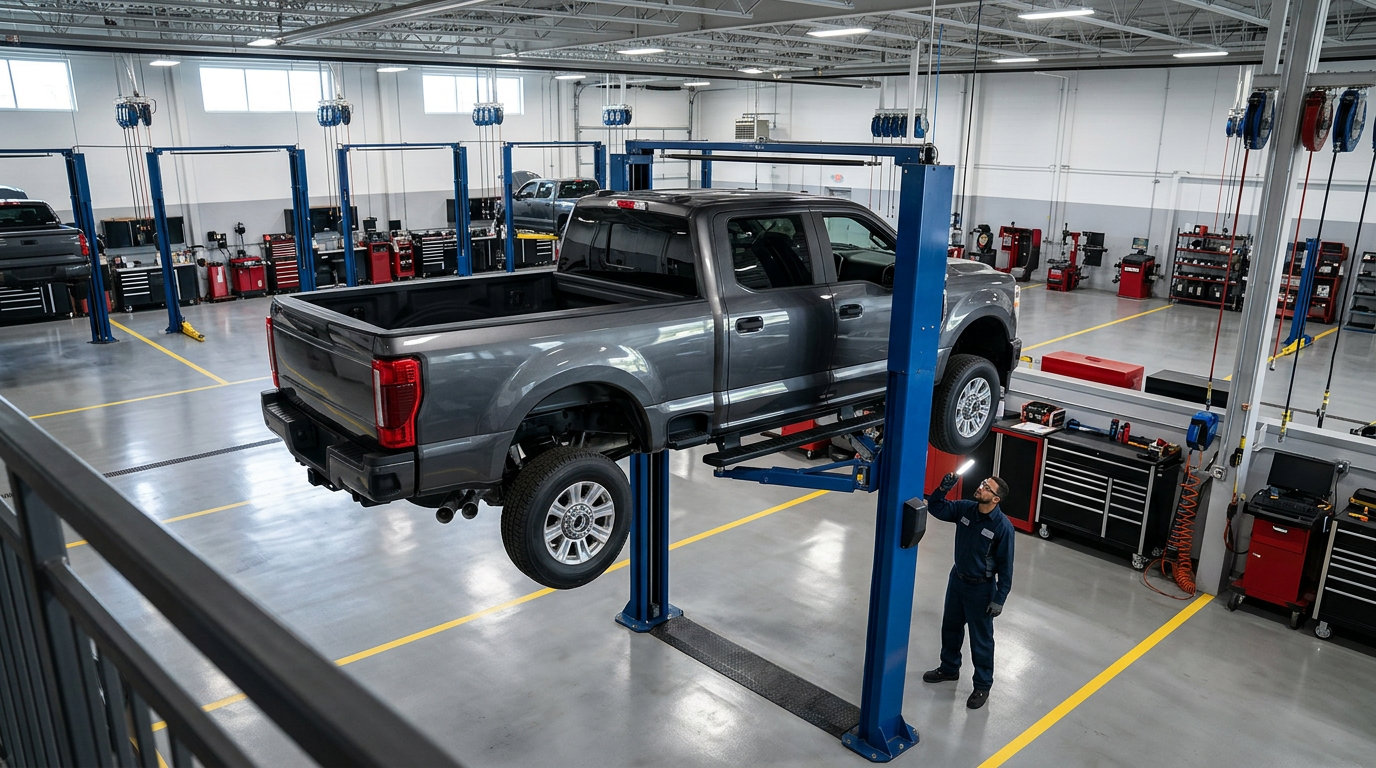
What I've Learned About 2026 Ram 1500 Farm Truck Maintenance
Which Engine in the 2026 Ram 1500 Offers Maximum Towing Capacity for Farm Trailers?
The 3.0L Hurricane Twin Turbo I6 (Standard Output) engine offers the maximum towing capacity for farm trailers in the 2026 Ram 1500 lineup, reaching up to 11,610 pounds when properly equipped. Delivering 420 hp and 469 lb-ft of torque, this twin-turbocharged inline-six surpasses the returning 5.7L HEMI V8, which tops out at 11,320 pounds of towing capacity. For agricultural operators hauling bumper-pull livestock trailers, round-bale wagons, or heavy farm equipment, the Standard-Output Hurricane provides the highest trailering ceiling in the light-duty family.
Matching the right engine configuration to specific farm chores requires looking at how power is delivered across the lineup. The 2026 Ram 1500 offers four distinct gas powertrain options, each paired with a TorqueFlite 8-speed automatic transmission. While the 3.0L Hurricane Twin Turbo I6 (Standard Output) leads in total trailering weight, the 3.6L Pentastar V6 with eTorque generates 305 hp and 269 lb-ft of torque while offering the highest maximum payload capacity at 2,360 pounds. That makes the Pentastar V6 a strong setup for bed-heavy jobs like carrying seed bags, fencing supplies, or auxiliary fuel tanks. Meanwhile, the High-Output 3.0L Hurricane Twin Turbo I6 pushes performance to 540 hp and 521 lb-ft of torque with a 10,000-pound tow rating, and the 5.7L HEMI V8 with eTorque brings back 395 hp and 410 lb-ft of torque for traditional V8 pull.
Reaching that peak 11,610-pound trailering threshold generally requires a Quad Cab 4x2 configuration equipped with the 3.92 axle ratio and the Trailer-Tow Group. However, most agricultural operations across the pastureland in Waynesboro choose a Crew Cab 4x4 setup for four-door versatility and off-road traction. A Crew Cab 4x4 powered by the Standard-Output Hurricane still pulls over 11,000 pounds with ease while handling slick farm lanes and muddy pasture gates. Every 2026 gas-powered model is backed by a 10-year/100,000-mile limited powertrain warranty, giving farm owners long-term confidence. If you want to review trailering specs for a specific build, drop by our Waynesboro showroom address or give our team (762) 365-0910 a quick call.
Table of Contents
- How Should Farm Operators Set Oil-Change Intervals for Short Trips and Heavy Towing?
- What Is the Recommended Severe-Duty Maintenance Schedule for a Ram 1500 Farm Truck?
- What Air Filter and Axle Fluid Services Keep a Farm Truck Running in Dusty Dirt Fields?
- How Many Watts of Onboard Exportable Power Does the Ram 1500 Ramcharger Provide for Farm Tools?
- How Much Does Routine Dealership Maintenance Cost for a Ram 1500 Farm Truck in Waynesboro?
How Should Farm Operators Set Oil-Change Intervals for Short Trips and Heavy Towing?
Farm operators using a 2026 Ram 1500 for frequent short trips, severe heavy towing, and prolonged field idling should set oil-change intervals between 4,000 and 5,000 miles or 350 engine hours, whichever comes first. While the automatic oil-life monitor tracks engine duty cycles, severe agricultural work degrades oil faster than highway driving, requiring services well before the absolute maximum threshold of 10,000 miles or 12 months.
Agricultural use exposes engine oil to demanding operational stress that standard highway driving never creates. Repeated short drives between barns or crop fields prevent the engine from reaching optimal operating temperature. That heat is necessary to boil off moisture and unburned fuel condensation inside the crankcase. Combined with low-speed towing and extended idling near farm machinery, unburned fuel can dilute the engine oil, while moisture accelerates sludge formation.
When farm managers ask our team about oil care, I advise tracking engine hours on the digital cluster display alongside mileage, because stationary pump running and gate idling build up friction wear without adding a single mile to the odometer. Using the correct fluid specification is critical to maintaining thermal protection. The 3.0L Hurricane Twin Turbo I6 (Standard Output), 3.6L Pentastar V6 with eTorque, and 5.7L HEMI V8 with eTorque require full synthetic SAE 0W-20 engine oil meeting MS-6395 standards. The High-Output 3.0L Hurricane Twin Turbo I6 mandates full synthetic SAE 0W-40 meeting MS-A0921 standards. You can easily stock up on factory-approved lubricants and filters through our OEM parts department.
What Is the Recommended Severe-Duty Maintenance Schedule for a Ram 1500 Farm Truck?
The recommended severe-duty maintenance schedule for a 2026 Ram 1500 farm truck requires routine multi-point inspections at every oil service, brake-lining and front-suspension inspections every 15,000 miles, differential and transfer-case fluid replacements at 30,000 miles, and spark plug replacements at 60,000 miles for twin-turbo engines.
Agricultural environments demand a structured service timeline to prevent minor wear from turning into costly field breakdowns. Follow these critical maintenance milestones for farm-duty operations:
- At Every Oil Change: Rotate tires at the first sign of irregular wear, inspect the battery and terminals, check CV and universal joints, inspect brake pads, rotors, and hoses, check cooling system hoses, and inspect the engine air filter.
- Every 15,000 Miles: Inspect front-suspension components and tie rod ends, inspect brake linings, and adjust the parking brake as needed.
- Every 24 Months: Flush and replace the brake fluid regardless of total mileage logged.
- Every 30,000 Miles: Replace the engine air filter, inspect axle assemblies for leakage, change front and rear differential axle fluid, and inspect transfer-case fluid under heavy towing or off-road conditions.
- Every 60,000 Miles: Replace spark plugs on 3.0L Hurricane Twin Turbo I6 engines (or 100,000 miles on 5.7L HEMI V8 engines).
- Every 120,000 Miles: Change the transfer-case fluid completely.
- 10 Years or 150,000 Miles: Flush and replace engine coolant, replace the accessory drive belt, and inspect the belt tensioner and pulleys.
Rough field lanes, rutted pastures, and red clay soils around Hephzibah put severe stress on steering linkage and suspension joints during daily livestock feeding rounds. Inspecting tie rods, ball joints, and universal joint boots every 15,000 miles catches torn grease seals before grit destroys internal bearings. Keeping up with fluid service intervals keeps your drivetrain fully protected under heavy towing and off-road stress.
What Air Filter and Axle Fluid Services Keep a Farm Truck Running in Dusty Dirt Fields?
Operating in dusty dirt fields requires inspecting the engine air filter at every single oil change and changing front and rear differential axle fluids every 30,000 miles. Fine agricultural dust and dirt pull directly into air intakes and axle breathers, making proactive filter replacements and fluid flushes essential to prevent power loss and mechanical wear.
Tilling fields, harvesting crops, and driving down unpaved farm roads generate dense clouds of airborne dust. If the engine air filter becomes clogged with dirt, airflow to the engine is restricted. This restriction leads to noticeable horsepower loss, degraded fuel economy, rough engine idling, or a lit Check Engine light. On twin-turbocharged engines like the 3.0L Hurricane Twin Turbo I6, clean airflow is critical to protect turbocharger compressor wheels from abrasive dust ingestion. Physical inspections at every oil service ensure dirty filters are replaced well ahead of standard highway intervals.
Axle care is equally vital for trucks working in dirt and mud. Heavy towing across uneven fields causes differential oil temperatures to spike. Over time, heat degrades the friction modifiers and thermal protection in axle lubricant. Additionally, driving through standing water or wet mud near field irrigation lines can allow moisture or fine silt to enter axle housings through breather tubes. Performing a full differential fluid exchange at 30,000 miles removes contaminated lubricant and replenishes gear protection for the differential gears and bearings.
How Many Watts of Onboard Exportable Power Does the Ram 1500 Ramcharger Provide for Farm Tools?
The 2026 Ram 1500 Ramcharger provides up to 7.2 kW ( 7,200 watts) of exportable onboard power through bed-mounted and cabin electrical outlets to operate heavy-duty farm tools out in the field. Powered by a liquid-cooled 92 kWh battery pack teamed with an onboard 130 kW generator and a 3.6L Pentastar V6 mechanical power source, this system effortlessly powers welders, air compressors, water pumps, and power saws without needing a standalone jobsite generator.
This extended-range electric truck uses its 3.6L Pentastar V6 engine strictly as a mechanical power producer, turning an onboard 130 kW generator to supply electrical energy to the electric drive motors and battery pack. Farm operators can manage energy distribution using selectable drive modes, including Electric+ Mode, E-Save Mode, and Eco Mode, alongside eAWD Mode and eSport Mode. By selecting E-Save Mode, operators can hold battery charge specifically to power high-draw equipment when they arrive at remote pastures or fence lines.
Having 7,200 watts of exportable electricity directly in the truck bed changes how field repairs get done. Instead of hauling a heavy, noisy gas generator on a trailer to fix a broken gate or repair farm implements, workers can plug 240-volt welders or 120-volt power tools directly into the Ram 1500 Ramcharger outlets. Furthermore, in the event of severe weather power outages, the vehicle's bi-directional charging capability can feed power back to essential farm buildings, running well pumps, ventilation fans, or refrigeration units for extended periods.
How Much Does Routine Dealership Maintenance Cost for a Ram 1500 Farm Truck in Waynesboro?
Routine full-synthetic oil changes and filter services for a 2026 Ram 1500 at a franchised dealership typically cost between $90 and $150, which includes a comprehensive multi-point vehicle inspection. Over a standard annual driving schedule of 15,000 miles under severe farm duty, total maintenance costs average approximately $1,700 per year, covering scheduled fluid services, tire rotations, air filters, and routine mechanical wear items [1.1].
Investing in factory-certified maintenance delivers measurable value for severe-service farm vehicles. Franchised dealerships use genuine Mopar full-synthetic oils specifically engineered to meet strict manufacturer standards, ensuring proper oil viscosity and thermal stability for high-torque towing. Factory-trained technicians perform multi-point inspections during every service, checking suspension components, transfer case seals, brake linings, and cooling system hoses to catch minor wear before it causes an expensive breakdown during planting or harvest season.
Routine maintenance at an authorized dealer also preserves your factory warranty coverage, including the 10-year/100,000-mile limited powertrain warranty. Keeping documented service records ensures that heavy-duty farm use never compromises warranty claims. If your truck is due for an oil change, axle fluid exchange, or severe-duty inspection, visit our service center in Waynesboro or contact our service advisors at (762) 365-0910 to keep your Ram 1500 working at peak performance.