



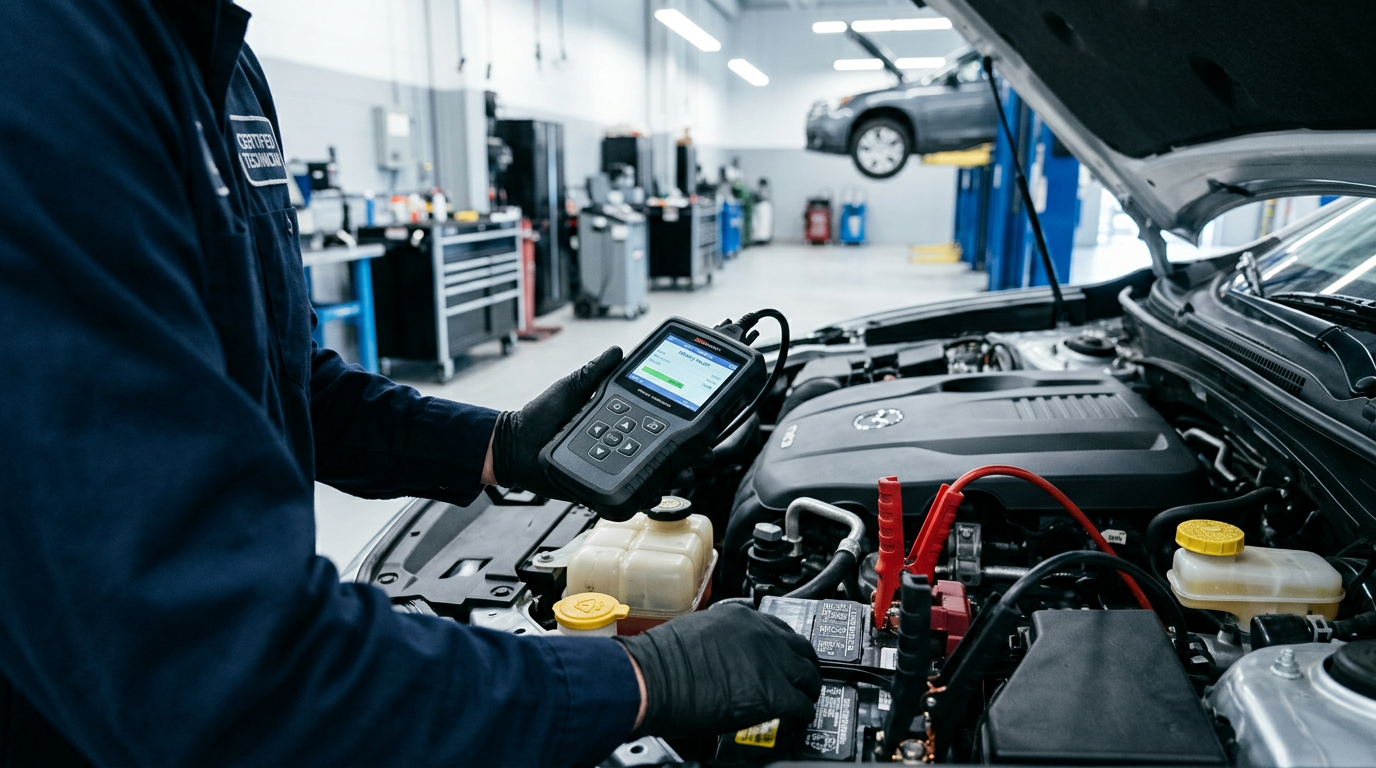
A Chrysler seasonal maintenance inspection includes a comprehensive multi-point evaluation of vital vehicle components: inspecting fluid levels and coolant condition, testing the 12-volt battery and charging circuit, measuring tire tread depth and cold inflation pressure, verifying air conditioning performance, checking brake components, inspecting wiper blades, and evaluating underbody chassis wear. Performing this service twice a year prevents unexpected breakdowns during ambient temperature extremes, ranging from summer highs near 91°F to winter lows dropping around 34°F.
A thorough seasonal check covers specific preventative measures engineered to match manufacturer guidelines. During every visit, our service team executes a structured multi-point workflow designed to safeguard key vehicle systems:
- Engine and Drivetrain Protection: Testing motor oil life, inspecting belt tensioners, checking air filters, and verifying engine coolant freeze and boilover protection.
- Climate Control and Visibility: Diagnostic testing of cabin heater output, front defroster velocity, air conditioning evaporator coil temp, cabin air filter contamination, and wiper blade rubber integrity.
- Electrical System Health: Load-testing battery cold-cranking capacity, inspecting terminal connectors for buildup, and evaluating alternator charging voltage.
- Chassis and Safety Hardware: Inspection of brake pads, rotors, caliper slide pins, steering linkage, shock absorbers, suspension bushings, and underbody shield fasteners.
Checking your vehicle on a seasonal schedule ensures early detection of minor wear before it develops into costly repairs. Drivers planning seasonal maintenance can visit our service department located at 480 US-25 in Waynesboro or speak directly with an advisor by giving our team a quick call to schedule an appointment.
Table of Contents
- What Seasonal Maintenance Services Does a Chrysler Pacifica Need Before Summer Heat in Waynesboro?
- How Often Should the Chrysler Pacifica Air Conditioning System Be Recharged or Inspected?
- How Does Ambient Temperature Impact Tire Inflation Pressure and Battery Reliability?
- Why Is Underbody Washing and Transmission Fluid Maintenance Essential for Drivetrain Life?
- Are OEM Mopar Parts Used for Seasonal Maintenance and What Does Service Cost?
- Common Questions About Chrysler Seasonal Care
- Schedule Your Chrysler Seasonal Maintenance in Waynesboro
What Seasonal Maintenance Services Does a Chrysler Pacifica Need Before Summer Heat in Waynesboro?
Before summer heat arrives in Waynesboro, a Chrysler Pacifica requires a complete air conditioning diagnostic test, a 12-volt battery conductance test, an engine cooling system inspection with pre-mixed coolant topping, a fresh cabin air filter installation, and cold tire pressure calibration. High ambient summer temperatures place heavy thermal stress on minivans carrying heavy passenger and cargo loads, making pre-summer preventative care essential.
The 3.6L V6 engine powering the 2026 Chrysler Pacifica relies on precise thermal management to maintain efficiency and cabin comfort. Operating in summer conditions requires a cooling system filled with Mopar Organic Additive Technology (OAT) 50/50 engine coolant pre-mixed with deionized water. Our service team checks coolant clarity, verifies radiator fan engagement, and inspects upper and lower radiator hoses for soft spots or heat fatigue.
Cabin air quality is another critical focal point during pre-summer service. The Chrysler Pacifica features an expansive interior with up to 32 cubic feet of cargo space behind the third row and available seating for up to 7 passengers. Spring pollen and agricultural dust quickly clog the cabin air filter, restricting airflow to rear passenger vents and forcing the climate control blower motor to work harder. Replacing the cabin filter every 12,000 miles restores full air circulation and protects cabin occupants from seasonal allergens.
Additionally, summer service includes checking engine air filters to preserve engine airflow and inspecting tire tread depth across all four wheels. When local families test-drive minivans or bring their vehicles in before extended summer road trips, our service technicians prioritize checking the cabin cooling pull-down speed to confirm that rear-seat passengers stay cool during hot afternoon drives.
How Often Should the Chrysler Pacifica Air Conditioning System Be Recharged or Inspected?
The Chrysler Pacifica air conditioning system should be inspected annually every spring, while a refrigerant recharge is only required when cooling output drops or diagnostic testing reveals pressure loss within the sealed loop. Unlike engine oil or air filters, automotive A/C refrigerant operates in a closed system and does not consume or break down under normal operation.
An annual A/C inspection focuses on system efficiency and mechanical component health rather than automatically adding refrigerant. Technicians connect manifold pressure gauges to measure high-side and low-side system pressures, insert digital thermometers into dashboard vents to verify discharge air temperatures, and inspect the A/C compressor clutch for smooth engagement. If vent temperatures register above factory specifications, technicians introduce UV leak detection dye to locate micro-cracks in hoses, condenser coils, or shaft seals before performing a vacuum drawdown and precise refrigerant recharge.
Postponing air conditioning maintenance can lead to component failure. Low refrigerant levels force the compressor to cycle continuously without adequate lubricating oil flow, accelerating internal compressor wear. Replacing a worn cabin air filter, cleaning debris from the front condenser fins, and scheduling annual system checks ensures immediate cooling performance when high humidity and scorching summer days arrive.
How Does Ambient Temperature Impact Tire Inflation Pressure and Battery Reliability?
Tire inflation pressure shifts by approximately 1 psi for every 10°F change in ambient air temperature, while extreme summer heat accelerates internal battery grid corrosion and battery fluid evaporation. Understanding these temperature-driven changes allows vehicle owners to maintain correct tire contact patches and avoid sudden battery failure.
Seasonal shifts illustrate how ambient temperatures alter tire pressure. When winter temperatures drop to near-freezing levels, cold tire pressure can drop 4 to 5 psi below placard targets, causing uneven shoulder wear and reduced fuel economy. Conversely, intense summer sunshine can elevate internal tire pressures beyond maximum recommendations if tires were inflated while warm. Checking tire pressure when the vehicle has been parked for at least three hours ensures accurate readings against the vehicle door-jamb placard.
Battery performance is equally sensitive to temperature extremes. High summer temperatures heat the engine bay, causing electrolyte liquid inside standard lead-acid batteries to evaporate and degrading internal lead plates. Although a weakened battery may start a vehicle without issue during warm weather, its diminished cold-cranking capacity will cause slow cranking or complete failure when ambient temperatures drop.
For drivers commuting along rural back roads around Hephzibah, unpaved surfaces and red clay dust introduce extra vibration and engine bay debris that can loosen battery terminal clamps and accelerate tire tread wear. Routine battery conductance testing identifies resistance increases early, allowing replacement before a failure occurs.
| Seasonal Factor | Temperature Effect | Recommended Service Action |
|---|---|---|
| Ambient Temperature Rise | Pressure increases ~1 psi per 10°F rise | Adjust cold tire pressure to match driver-door placard |
| Ambient Temperature Drop | Pressure decreases ~1 psi per 10°F drop | Inflate tires to placard pressure when cold |
| Engine Bay Heat Exposure | Accelerates battery fluid evaporation | Perform digital battery load and conductance test |
| Winter Cold Snap | Reduces battery cold-cranking amp capacity | Inspect terminals and clean anti-corrosion coating |
Why Is Underbody Washing and Transmission Fluid Maintenance Essential for Drivetrain Life?
Underbody washing removes trapped mud, grit, and road salts that trap moisture against structural steel and brake lines, while transmission fluid maintenance preserves fluid viscosity and removes metallic wear particles to extend transmission longevity. Both services protect vital drivetrain and chassis components against costly friction and corrosion damage.
Vehicles exposed to wet clay, farm mud, or seasonal road treatments accumulate debris inside subframe pockets, suspension control arms, and brake caliper assemblies. Trapped mud holds moisture directly against steel brake lines, aluminum suspension links, and underbody wiring harnesses. Regular underbody high-pressure washing cleans out these collection points, preventing surface rust from compromising structural frame coatings and underlying electrical connections.
Drivetrain longevity depends heavily on clean, thermally stable transmission fluid. Heavy-duty trucks and multi-passenger vehicles generate substantial heat inside the transmission valve body and torque converter during heavy hauling or stop-and-go driving:
- 2026 Ram 1500: The high-torque powertrain relies on specialized automatic transmission fluid to lubricate planetary gear sets and cool internal clutch packs during heavy towing.
- 2026 Chrysler Pacifica: Features a smooth-shifting automatic 9-speed transmission requiring clean fluid to maintain precise hydraulic pressure across all gear ratios.
- 2026 Jeep Grand Cherokee: Available with an advanced TorqueFlite® 8-speed automatic transmission designed to deliver power to an All-wheel drive system across varying terrain.
Over time, thermal stress breaks down fluid viscosity and depletes anti-wear additives, allowing metallic micro-particles to circulate through sensitive valve bodies. Changing transmission fluid and filters according to manufacturer intervals removes suspended contaminants, protects friction linings, and prevents costly drivetrain repairs over the life of the vehicle.
Are OEM Mopar Parts Used for Seasonal Maintenance and What Does Service Cost?
Authorized CDJR service centers use genuine OEM Mopar parts, fluids, and factory-formulated lubricants designed specifically to meet Chrysler, Dodge, Jeep, and Ram engineering specifications. A comprehensive seasonal maintenance check typically ranges from $75 to $200, depending on the model, powertrain requirements, and specific service packages selected.
Using original equipment manufacturer parts guarantees proper component fit, thermal tolerance, and long-term durability. Mopar oil filters feature anti-drainback valves that prevent dry engine starts, while Mopar cabin and engine air filters maintain exact filtration ratings without restricting intake or HVAC airflow. Furthermore, using genuine fluids—such as pre-mixed Mopar OAT engine coolant—preserves factory warranty protections. Key factory maintenance schedule intervals include:
- Engine Oil and Filter Service: Due when the vehicle's oil-change indicator signals, or at a maximum interval of 10,000 miles or 12 months.
- Cabin Air Filter Replacement: Recommended every 12,000 miles to maintain interior air quality and HVAC blower motor efficiency.
- Engine Air Cleaner Replacement: Scheduled every 30,000 miles under normal driving conditions.
- Engine Coolant Service: Long-life Mopar OAT coolant replacement scheduled at 10 years or 150,000 miles.
Drivers who handle routine fluid top-offs or minor filter replacements at home can order genuine Mopar parts directly through our dedicated dealership parts counter.
Common Questions About Chrysler Seasonal Care
Q: How long does a comprehensive seasonal maintenance check take at the service center?
A standard seasonal maintenance inspection typically takes between 45 minutes and 90 minutes to complete. During this time, certified technicians perform an engine oil and filter service, tire rotation, battery load test, fluid level check, and multi-point safety evaluation. Scheduling an appointment in advance helps minimize wait times and ensures all required Mopar filters and fluids are staged before your arrival.
Q: Can driving with a low coolant level damage a Chrysler engine during summer?
Yes, driving with low coolant during summer can cause rapid engine overheating, resulting in warped cylinder heads, blown head gaskets, or complete engine failure. Chrysler engines rely on a precise 50/50 blend of Mopar OAT coolant and deionized water to absorb combustion heat and prevent boilover. If your coolant temperature gauge rises above normal or warning lights appear, stop the vehicle safely and check the coolant reservoir level.
Q: What warning signs indicate a cabin air filter needs immediate replacement?
Common indicators of a dirty cabin air filter include reduced airflow from dashboard vents, weak air conditioning output, persistent musty odors when turning on the fan, and increased dust accumulation on interior surfaces. A severely clogged cabin filter also places excessive electrical strain on the HVAC blower motor, potentially causing thermal overload or premature motor failure.
Q: How does towing heavy loads affect transmission service intervals on Ram trucks?
Towing heavy trailers or hauling dense cargo increases internal transmission temperatures, accelerating thermal breakdown of transmission fluid. Under severe operating conditions—such as frequent towing, off-road driving, or prolonged idling—manufacturer guidelines recommend inspecting transmission fluid quality more frequently and shortening service intervals to preserve gear lubrication and clutch plate lining integrity.
Q: What should drivers do if their tire pressure light turns on during a sudden temperature drop?
When ambient temperatures drop rapidly, tire pressure decreases by about 1 psi for every 10°F change, which can trigger the Tire Pressure Monitoring System (TPMS). Drivers should check tire pressures with an accurate gauge when the tires are cold, add air to match the values listed on the driver-door placard, and drive the vehicle for a few miles to allow the TPMS sensors to reset automatically.
Schedule Your Chrysler Seasonal Maintenance in Waynesboro
Maintaining your vehicle with scheduled seasonal inspections protects performance, safety, and long-term resale value. Whether your Chrysler Pacifica requires a pre-summer air conditioning service, your Ram truck needs a transmission fluid inspection, or your Jeep SUV is due for a routine oil change and battery test, our certified technicians deliver expert service using genuine Mopar parts.
To book your upcoming seasonal inspection, stop by our service department at 480 US-25 in Waynesboro or speak directly with our service team by giving us a quick call today to reserve your preferred appointment time.