


Properly maintaining a Stellantis vehicle requires adhering to factory-recommended oil service intervals capped at 10,000 miles or 12 months, pairing oil changes with tire rotations, using OEM Mopar fluids and filters, and adhering to diagnostic protocols through authenticated scan tools for vehicles equipped with a Security Gateway Module. Following severe-duty schedules for frequent towing, idling, or off-road conditions ensures long-term powertrain reliability across Chrysler, Dodge, Jeep, and Ram models.
Modern Stellantis vehicles feature advanced digital oil life monitors that track engine revolutions, operational temperatures, and driving conditions to alert drivers when routine service is due. Even if the dashboard message center has not triggered a warning, factory engineering specifications dictate that engine oil and filter changes must never exceed 10,000 miles or one full year, whichever comes first. Routine care involves more than just swapping engine oil. Comprehensive maintenance requires systematic inspection of chassis components, steering linkages, suspension ball joints, brake friction materials, and driveline fluid health.
Every vehicle brand under the Stellantis umbrella shares core mechanical architectures, from the electronic control modules to the heavy-duty transaxles and transfer cases. Following a strict preventive care regimen keeps these integrated systems working smoothly. Regular vehicle maintenance preserves long-term mechanical integrity, prevents premature component fatigue, and maintains active protection under manufacturer warranty programs.
Our certified technicians handle all routine factory maintenance schedules, specialized fluid flushes, and complex electrical diagnostics. Drivers can locate our service center on US Highway 25 or reach our service desk directly by calling (762) 365-0910 to set up an upcoming service appointment.
Table of Contents
- What Is the Official Factory Maintenance Schedule for Chrysler, Dodge, Jeep, and Ram Models?
- What Are the Key Service Intervals for the 3.6L Pentastar V6 and Hurricane Twin-Turbo Engines?
- What Servicing Is Required for Stellantis 4xe Plug-in Hybrids and 4x4 Systems?
- How Do Security Gateway Modules and AutoAuth Affect Diagnostic Scanners and DIY Repairs?
- What Is the Average 5-Year Maintenance Cost for a Jeep Wrangler or Ram 1500?
- Common Questions About Stellantis Vehicle Maintenance in Waynesboro
What Is the Official Factory Maintenance Schedule for Chrysler, Dodge, Jeep, and Ram Models?
The official Stellantis factory maintenance schedule centers on 10,000-mile or 12-month service intervals for routine oil changes, tire rotations, and multi-point inspections, with major mechanical evaluations occurring at 30,000, 60,000, and 100,000-mile milestones.
Factory engineering protocols establish a clear progression of service requirements as vehicles accumulate mileage:
- 10,000-Mile Service: Change engine oil and Mopar filter, rotate tires to balance tread wear, inspect front and rear brake pads and rotors, inspect battery terminals, and check overall engine coolant and washer fluid levels.
- 20,000-Mile Service: Perform all 10,000-mile inspection items, replace the cabin air filter to maintain HVAC efficiency, and inspect front suspension components, tie rod ends, and boot seals for wear or grease leakage.
- 30,000-Mile Service: Perform base oil and tire service, replace the engine air cleaner filter, inspect transfer case fluid levels on four-wheel-drive trucks and SUVs, and examine CV joints and drive shafts.
- 60,000-Mile Service: Conduct a comprehensive multi-point system check, replace cabin and engine air filters, inspect transfer case and differential gear lubricants, and test engine coolant freeze protection.
- 100,000-Mile Service: Replace spark plugs across gasoline engines, replace accessory drive belts, perform a complete engine coolant flush and refill, and service automatic transmission fluid and filter assemblies under severe-duty operating schedules.
Adhering to this structured schedule protects vehicle longevity and validates coverage under the manufacturer warranty package. New Chrysler, Dodge, Jeep, and Ram models carry a 3-year/36,000-mile basic warranty alongside a 5-year/60,000-mile powertrain warranty, which covers internal engine components, transmission internals, drive axles, and transfer cases against factory defects. Documented regular maintenance proves proper vehicle care if warranty-covered driveline repairs are ever needed.
What Are the Key Service Intervals for the 3.6L Pentastar V6 and Hurricane Twin-Turbo Engines?
The 3.6L Pentastar V6 engine requires synthetic oil changes every 7,500 to 10,000 miles and spark plug replacements at 100,000 miles, whereas the high-output 3.0L Hurricane twin-turbo inline-6 demands 5,000 to 7,500-mile oil intervals with strict adherence to specialized low-viscosity synthetic oils.
The naturally aspirated 3.6L Pentastar V6 powers popular platforms including the Jeep Wrangler, Jeep Grand Cherokee, and Ram 1500. This powertrain uses a top-mounted cartridge-style oil filter housing requiring a 24mm socket for cap removal. During oil changes, replacing the rubber O-ring seal on the filter cap prevents pressurized oil leaks. The engine holds 5 quarts of 0W-20 synthetic oil. Spark plug service occurs at 100,000 miles, utilizing dual-iridium plugs to maintain proper ignition spark across all six combustion cylinders.
The twin-turbocharged 3.0L Hurricane inline-6 engine utilizes precision direct fuel injection and dual turbochargers that operate under high thermal and mechanical stress. Engine oil for the Hurricane engine must conform strictly to Chrysler Material Standard MS-12991 to protect turbocharger bearings and prevent severe oil coking inside fluid supply lines. Twin turbochargers draw large volumes of ambient air, making clean engine air intake filters essential to prevent airborne dust particles from eroding high-speed compressor wheels.
The red clay dust and unpaved farm access roads around Hephzibah mean truck and SUV owners driving in rural agricultural areas should inspect air intake filters every 5,000 miles rather than waiting for the standard 30,000-mile factory threshold.
What Servicing Is Required for Stellantis 4xe Plug-in Hybrids and 4x4 Systems?
Servicing Stellantis 4xe plug-in hybrid models requires tracking internal combustion engine operating hours alongside odometer mileage while maintaining separate liquid cooling systems for the engine block and high-voltage lithium-ion battery array.
Vehicles featuring 4xe plug-in hybrid technology, such as the Jeep Wrangler 4xe and Jeep Grand Cherokee 4xe, utilize an automatic oil life monitor that factors in electric-only driving miles. Because the gasoline engine may remain dormant during short electric trips, oil changes are calculated based on actual engine runtime hours or a maximum time limit of 12 months or 10,000 miles. Additionally, 4xe vehicles utilize regenerative braking, which uses the electric traction motor to decelerate the vehicle. While this extends the physical lifespan of brake pads and rotors, physical brake calipers and slide pins still require annual lubricated inspections to prevent rust binding from road moisture.
Heavy-duty 4x4 drive systems on trucks and SUVs rely on front differentials, rear differentials, and central transfer cases to divide power among all four wheels. Under normal highway driving, front and rear axle fluid levels require visual checks at every oil change, with complete gear oil drain-and-fill services scheduled between 40,000 and 60,000 miles. For vehicles used in frequent heavy towing, deep water fording, or continuous off-road trail driving, changing transfer case and differential fluids every 20,000 to 30,000 miles prevents gear tooth scoring and bearing breakdown.
How Do Security Gateway Modules and AutoAuth Affect Diagnostic Scanners and DIY Repairs?
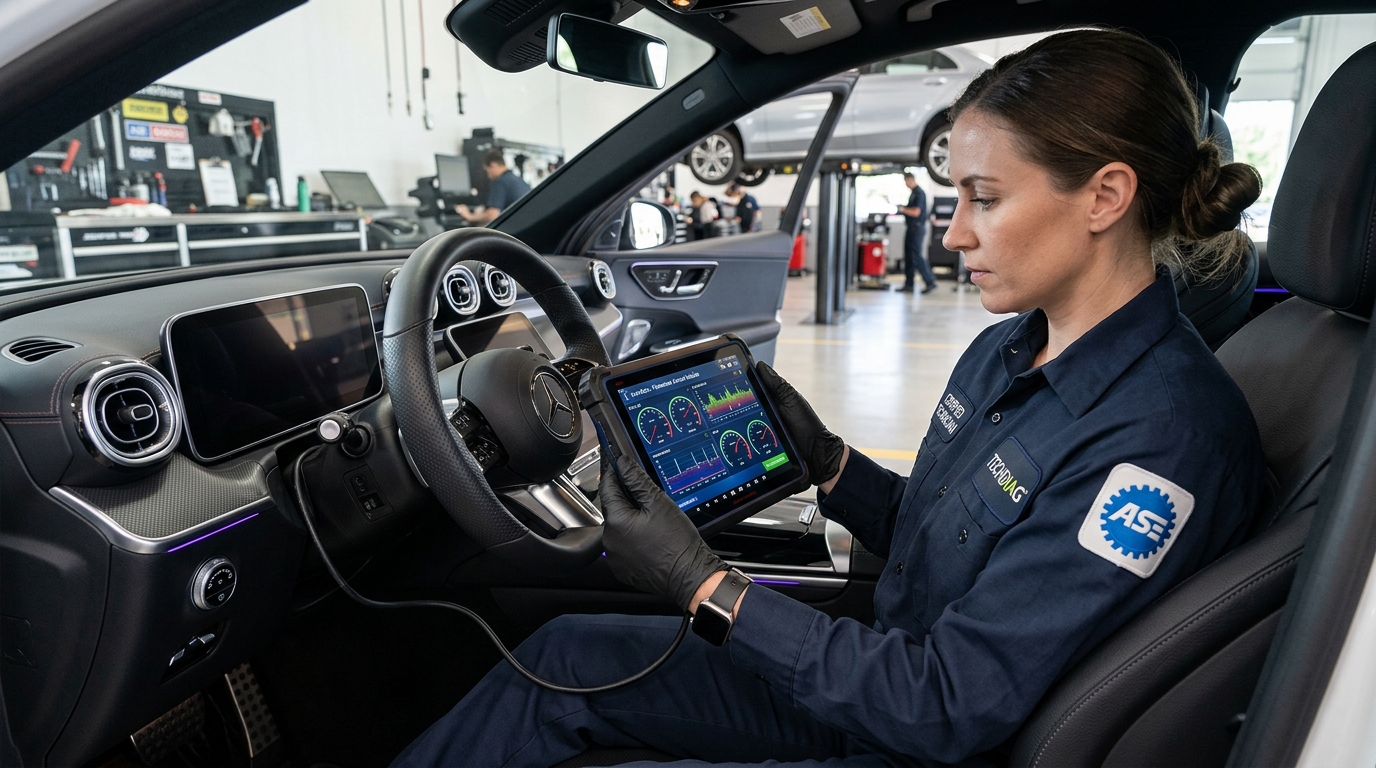
Stellantis vehicles engineered for the 2018 model year and newer feature a built-in Security Gateway Module that blocks unauthorized OBD-II commands, requiring technicians and DIYers to use an AutoAuth registered diagnostic tool to clear trouble codes or perform bidirectional maintenance commands.
The electronic Security Gateway Module acts as a cybersecurity firewall between the vehicle's internal Controller Area Network bus and external diagnostic hardware. While generic OBD-II code readers can still read basic emission-related fault codes through the under-dash port, they cannot perform write functions. Without proper security authentication, an aftermarket scanner cannot clear diagnostic trouble codes, reset oil life indicators, execute electronic park brake retract commands, perform ABS brake bleeding routines, or calibrate steering angle sensors.
To perform complete vehicle diagnostics, mechanics use diagnostic scan tools registered with the AutoAuth cloud authentication network. The scanner verifies authorization over a secure internet connection, unlocking the electronic firewall and allowing full two-way communication with vehicle control modules. DIY enthusiasts attempting maintenance at home must either utilize bypass harness leads on specific modules or acquire an AutoAuth compatible scan tool interface to complete repairs properly.
Home mechanics completing basic maintenance, such as oil changes or filter replacements, can easily locate genuine OEM fluids, filters, and gaskets by ordering OEM Mopar replacement parts online through our dedicated parts department.
What Is the Average 5-Year Maintenance Cost for a Jeep Wrangler or Ram 1500?
The estimated routine 5-year maintenance cost for a Jeep Wrangler or Ram 1500 ranges from $3,500 to $4,800 under standard vehicle operating conditions, covering scheduled factory services, fluid replacements, tire sets, and wearable brake components.
Vehicle operational expenses over a 5-year or 75,000-mile timeline divide into scheduled maintenance items and unscheduled wear replacements:
| Service Category | Estimated 5-Year Maintenance Requirement | Expected Service Frequency |
|---|---|---|
| Synthetic Oil & Filter Changes | 8 to 10 completed service visits | Every 7,500 to 10,000 miles / 12 months |
| Tire Rotation & Balancing | 8 to 10 tire rotations | Every 6,000 to 8,000 miles |
| Brake Friction Replacement | 1 to 2 sets of front/rear pads and rotors | Every 35,000 to 50,000 miles |
| Cabin & Engine Air Filters | 2 to 3 replacement sets | Every 20,000 to 30,000 miles |
| Replacement All-Terrain Tires | 1 complete replacement set (4 to 5 tires) | Every 45,000 to 60,000 miles |
| Spark Plugs & Coolant Service | 1 complete service visit | At 100,000 miles / 10 years |
Operating a truck or SUV under severe-duty conditions—such as pulling heavy trailers, idling on job sites, or navigating mud—increases fluid replacement frequency across the transmission, transfer case, and front/rear axles. Unscheduled wear items like 12V AGM batteries, windshield wiper blades, and wheel alignments also factor into overall ownership expenses. Manufacturer warranty coverage under the 5-year/60,000-mile powertrain warranty protects owners against unexpected mechanical failures in internal engine, transmission, or axle assemblies during this window.
Technicians performing routine multi-point inspections frequently remind truck owners that staying ahead of differential fluid and transmission service prevents high-dollar driveline repairs as vehicles cross the 60,000-mile mark.
Common Questions About Stellantis Vehicle Maintenance in Waynesboro
Waynesboro's mix of highway driving along US Highway 25 and dirt county roads near the agricultural fairgrounds creates severe-duty operating conditions that shorten filter and chassis lubrication life. Below are straightforward answers to common maintenance questions regarding Chrysler, Dodge, Jeep, and Ram vehicles.
Q: How often does the engine oil need to be changed on a Jeep Wrangler or Ram 1500?
Engine oil and filter changes should be performed whenever the automatic oil change indicator triggers, but service must never exceed 10,000 miles or 12 months under normal driving conditions. Vehicles driven frequently in dust, extreme temperatures, heavy stop-and-go traffic, or regular towing should have full synthetic oil changed every 4,000 to 5,000 miles.
Q: Why is an AutoAuth subscription needed to reset service indicators on 2018 and newer Stellantis vehicles?
Stellantis added a cybersecurity firewall known as the Security Gateway Module on 2018 and newer models to prevent unauthorized wireless or OBD-II port tampering. An AutoAuth account allows compatible diagnostic scan tools to securely log into the network, enabling technicians to clear codes, perform system resets, and execute bidirectional maintenance procedures.
Q: What specific maintenance is needed for the 3.0L Hurricane twin-turbo engine?
The twin-turbocharged 3.0L Hurricane inline-6 engine requires full synthetic oil meeting Chrysler Material Standard MS-12991 specifications, strict adherence to 5,000 to 7,500-mile oil change intervals, and frequent inspections of the engine air intake filters to protect high-speed turbocharger compressor impellers from abrasive airborne dirt.
Q: What maintenance items are covered under the standard factory warranty?
Standard factory warranties cover mechanical repairs caused by manufacturing defects in materials or workmanship, including the 3-year/36,000-mile basic warranty and 5-year/60,000-mile powertrain warranty. Wear-and-tear maintenance items such as oil filters, engine oil, engine air filters, cabin air filters, wiper blades, and brake pads are routine owner upkeep responsibilities and are not covered under base warranty terms.
Q: How does towing or off-road driving affect the factory maintenance schedule?
Towing heavy loads, driving on unpaved dirt roads, idling for long periods, or operating in off-road environments shifts a vehicle into the severe-duty service category. Under severe duty, engine oil, transfer case fluid, front and rear differential lubricants, and engine air filters must be replaced at roughly half the standard highway driving mileage interval to protect driveline components from thermal breakdown and contamination.
To schedule your next factory service visit, stop by our Waynesboro service center address at 480 US Highway 25 or give our service desk a call at (762) 365-0910 to speak with a factory-trained technician.
© 2026 Paul Thigpen CDJR Waynesboro. All rights reserved.