



Routine annual maintenance for Stellantis vehicles—including Chrysler, Dodge, Jeep, and Ram models—typically averages between $600 and $900 per year under standard driving conditions. Operating costs vary based on vehicle architecture, usage intensity, and powertrain configuration. Light-duty passenger vehicles like the Chrysler Pacifica sit toward the lower end of that range with standard front-wheel-drive service intervals, while heavy-duty trucks and 4x4 SUVs like the Jeep Grand Cherokee trend toward the higher end due to larger oil capacities and multi-differential transfer case fluids. Drivers can consult with our team at our service center on US Highway 25 or call us directly at (762) 365-0910 to establish an exact maintenance schedule tailored to their driving habits.
Scheduled factory maintenance forms the baseline of annual upkeep expenses. A standard Mopar service visit for a gasoline engine includes synthetic oil replacement, an OEM filter change, tire rotation, and a comprehensive multi-point inspection every 6,000 to 8,000 miles. Performing tire rotations at every oil interval ensures balanced tread wear across all four positions, protecting expensive all-terrain or all-season tire compounds and preserving warranty coverage on original equipment tires.
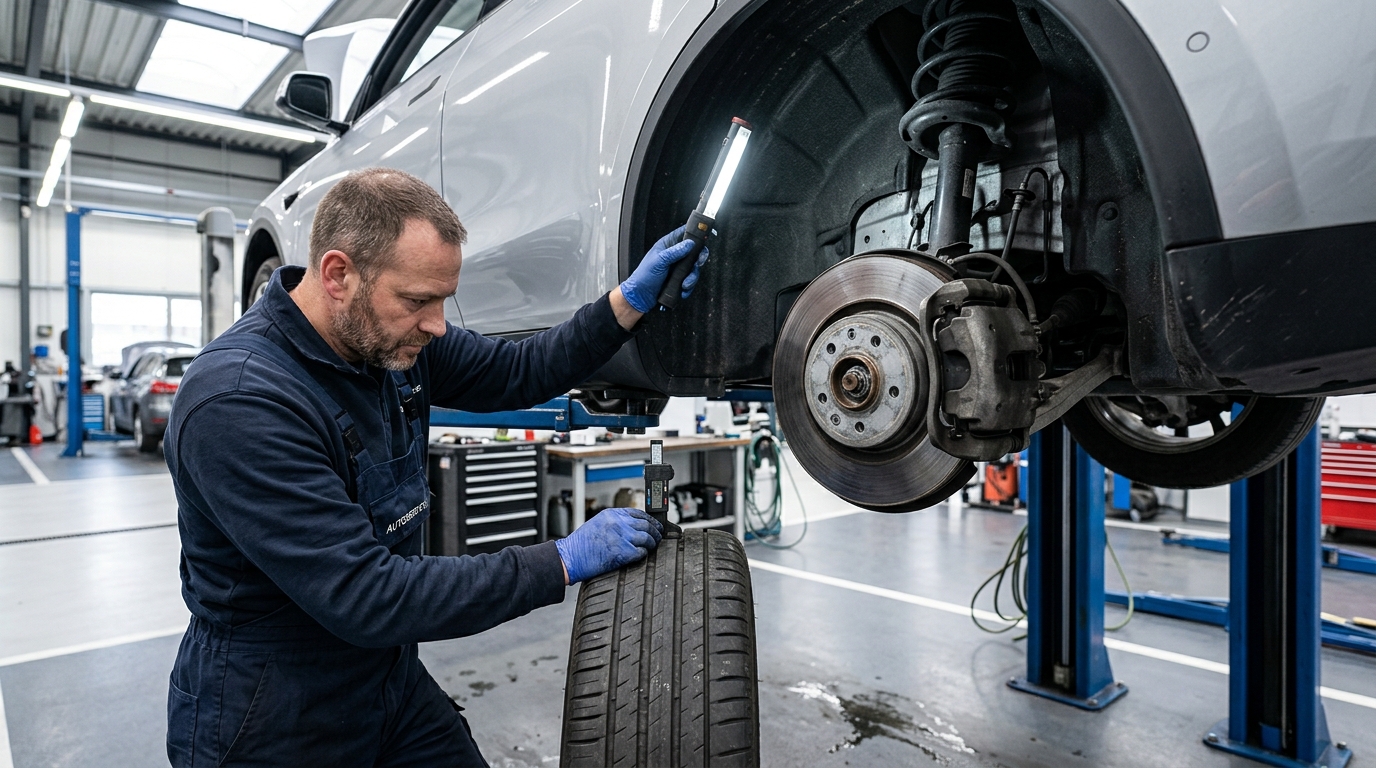
Unscheduled maintenance and wearable component replacements make up the balance of long-term ownership costs. Standard engine air filters and cabin air filters require replacement roughly every 15,000 to 30,000 miles. Brake pads and rotors generally undergo routine safety inspections every 20,000 to 25,000 miles, with pad friction material typically lasting between 30,000 and 70,000 miles depending on towing frequency and driving aggressiveness.
Vehicle application significantly influences where a vehicle falls within the annual cost spectrum. In agricultural areas around Waynesboro, trucks and SUVs frequently experience severe-duty operating conditions, including dusty dirt roads, heavy bed payloads, and low-speed farm hauling. These operating factors shorten fluid degradation cycles for differentials and transfer cases, elevating annual preventative maintenance costs slightly while preventing catastrophic mechanical breakdowns.
Table of Contents
- What Regular Servicing Is Required for Stellantis 4xe Plug-In Hybrid Models?
- What Routine Transmission, ZF 8-Speed, and 4WD Maintenance Do Stellantis Vehicles Need?
- How Critical Are Exact Stellantis Oil Specifications and Pentastar Spark Plug Intervals?
- Are Aftermarket Parts Acceptable Under Stellantis Factory Warranties?
- Common Stellantis Maintenance Questions: Resetting Indicators and Official Schedules
- Schedule Certified Mopar Service and Parts Care in Waynesboro
What Regular Servicing Is Required for Stellantis 4xe Plug-In Hybrid Models?
Stellantis 4xe plug-in hybrid models require all traditional internal combustion engine maintenance alongside targeted servicing for high-voltage battery cooling circuits, electric drive modules, and regenerative braking components. Vehicles equipped with 4xe technology, such as plug-in hybrid variants of the Jeep Grand Cherokee and Jeep Wrangler, utilize a dual-powertrain setup where an electric motor works in tandem with a turbocharged gasoline engine. Because the gasoline engine cycles on and off based on battery charge and throttle demand, oil changes are determined by engine runtime hours and the automatic oil life monitor rather than strict odometer distance alone, though oil must still be changed at least once every 12 months.
First-time plug-in hybrid owners visiting our shop often ask whether the high-voltage battery requires routine fluid changes before they ask about oil intervals. The high-voltage lithium-ion battery pack and power electronics utilize dedicated liquid cooling circuits filled with specialized Mopar coolant. Technicians must inspect these secondary cooling systems for proper fluid levels, structural hose integrity, and leaks during every routine service, with complete fluid flushing required at extended factory intervals. Keeping these cooling circuits clean and air-free maintains optimal battery operating temperatures, which preserves electric driving range and extends overall pack longevity.
Regenerative braking systems on 4xe vehicles reduce mechanical brake pad wear significantly compared to traditional gas-powered SUVs, but they introduce unique inspection requirements:
- Mechanical brake friction pads require periodic disassembly and lubrication because reduced physical usage can allow rust or road debris to build up on slide pins and caliper brackets.
- The hybrid electric drive module (EDM) integrated into the transmission housing relies on specialized synthetic fluid that requires periodic level checks and clean fluid changes at major mileage intervals.
- The 12-volt auxiliary battery, which powers critical vehicle electronics and triggers the high-voltage contactors, requires routine voltage testing during regular maintenance visits.
What Routine Transmission, ZF 8-Speed, and 4WD Maintenance Do Stellantis Vehicles Need?
Stellantis vehicles equipped with the TorqueFlite 8-speed automatic transmission require fluid and pan-filter replacement between 50,000 and 75,000 miles under severe operating conditions, while 4WD transfer cases and differentials require fresh gear lubricant every 30,000 to 60,000 miles. While marketing materials frequently refer to the ZF 8-speed automatic transmission as having a "fill for life" factory fluid, transmission manufacturer ZF explicitly recommends changing the fluid and integrated pan filter before 75,000 miles or 8 years, particularly for vehicles subjected to heavy loads, frequent trailering, or high ambient operating temperatures.
Over time, transmission fluid experiences thermal degradation and shear stress, losing its protective viscosity and friction-modifying properties. The 8-speed automatic utilizes a plastic fluid pan featuring a non-removable, built-in fine mesh filter and magnet array designed to trap metallic wear particles. Replacing the entire pan assembly alongside fresh Mopar-approved automatic transmission fluid restores smooth hydraulic valve body operation and preserves clutch pack life in high-torque applications like the Ram 1500 or the 324 hp 2026 Jeep Grand Cherokee.
Four-wheel-drive and all-wheel-drive systems demand regular fluid exchanges across three primary mechanical components:
- Front differential: Fluid absorbs high heat during continuous 4x4 engagement and should be drained and refilled with synthetic gear lubricant every 30,000 to 60,000 miles.
- Rear differential: Axle lubricant breaks down under heavy towing and bed payloads; severe-duty service schedules call for frequent fluid changes to protect ring and pinion gear sets.
- Transfer case: Transfer case fluid manages power distribution between front and rear axles. Frequent off-road driving or trailering breaks down this specialized fluid, requiring fresh fluid every 30,000 miles to protect internal shift clutches and drive chains.
In rural communities like Hephzibah, where vehicles regularly transition between highway cruising and unpaved back roads, maintaining clean transfer case and differential fluids is vital. Neglecting four-wheel-drive maintenance leads to accelerated gear teeth wear, noisy bearings, and potential binding in active 4x4 transfer cases.
How Critical Are Exact Stellantis Oil Specifications and Pentastar Spark Plug Intervals?
Following the exact engine oil specification code listed in the maintenance manual is critical for preventing internal engine wear and oil sludge formation, while the 3.6L Pentastar V6 engine requires new spark plugs every 100,000 miles or 10 years. Modern Stellantis engines feature precise internal tolerances, variable valve timing actuators, and advanced turbocharging systems that rely on specific additive chemistries. Choosing a generic motor oil based solely on viscosity grade rather than formal factory approval codes can compromise engine protection and prematurely degrade exhaust aftertreatment components.
Vehicle service documentation often specifies proprietary oil codes, including legacy PSA B71 standards (such as PSA B71 2290 or PSA B71 2312) or newer approval ratings like Stellantis FPW9.55535/03. These spec codes define strict limits on sulfated ash, phosphorus, and sulfur content (low-SAPS formulations):
- Low-SAPS oils protect catalytic converters and particulate filters from thermal poisoning and ash blockage.
- Formulations matching specific codes include specialized detergent packages designed to prevent low-speed pre-ignition (LSPI) in turbocharged gasoline engines.
- Temperature-specific ratings, such as PSA B71 2297 for hot-climate operation, ensure the oil maintains adequate film strength during high-ambient heat conditions.
Ignition system maintenance on the widely used 3.6L Pentastar V6 engine—found across popular models including the Chrysler Pacifica with its 287 hp rating—centers around factory-installed iridium spark plugs. These long-life iridium plugs provide consistent spark energy for 100,000 miles under normal driving conditions. Replacing spark plugs on the Pentastar engine requires removing the upper intake manifold plenum to access the cylinder banks:
- Technicians remove the upper intake plenum and replace the plenum gaskets to ensure a tight air seal upon reassembly.
- Ignition coil boots are inspected for heat cracking or oil contamination before new iridium plugs are torqued to factory specifications.
- Replacing worn plugs on schedule prevents engine misfires, maintains complete fuel combustion, and protects the catalytic converters from unburned fuel damage.
Are Aftermarket Parts Acceptable Under Stellantis Factory Warranties?
High-quality aftermarket maintenance parts are fully acceptable under Stellantis factory warranties and will not void coverage as long as the replacement components meet or exceed original equipment specifications. Federal law, specifically the Magnuson-Moss Warranty Act, protects vehicle owners by prohibiting manufacturers from voiding a vehicle warranty simply because maintenance was performed using non-OEM parts or completed at an independent facility. A manufacturer can only deny a warranty claim if they prove that an aftermarket part directly caused the specific mechanical failure.
Using genuine Mopar components provides distinct advantages for long-term ownership peace of mind. Factory Mopar parts are engineered to exact dimensional tolerances and material standards specified by Stellantis engineers, ensuring identical fitment, performance, and durability. Owners interested in maintaining original factory standards can conveniently handle their vehicle maintenance needs by ordering genuine Mopar parts online directly through our certified dealership catalog.
To protect warranty coverage when utilizing independent shops or performing self-maintenance, vehicle owners should adhere to three key record-keeping practices:
- Retain itemized, dated receipts for all purchased parts, fluids, and filters showing exact part numbers and fluid specification approvals.
- Keep a detailed maintenance log recording the date, vehicle mileage, and specific service performed for every interval.
- Ensure all installed engine oils explicitly list the required Stellantis FPW or PSA B71 approval codes on the bottle labeling.
Common Stellantis Maintenance Questions: Resetting Indicators and Official Schedules
Q: How do you reset the oil change indicator on Jeep, Ram, Dodge, and Chrysler vehicles?
To reset the automatic oil change indicator system manually, turn the ignition switch to the ON position without starting the engine. Fully depress and release the accelerator pedal three times within 10 seconds, then turn the ignition switch back to the OFF position. On newer models equipped with digital instrument cluster displays, the reset can also be performed through the vehicle settings menu using the steering wheel directional controls to scroll to the "Oil Life" screen and holding the OK button until the percentage resets to 100 percent.
Q: What is the official recommended routine maintenance schedule for Stellantis gasoline engines?
Stellantis recommends basic routine service, including engine oil and filter changes alongside tire rotations, every 6,000 to 8,000 miles or 12 months, whichever occurs first. Major service milestones occur every 30,000 miles for engine air filters and cabin air filters, 60,000 miles for transfer case and differential fluids, and 100,000 miles for spark plug replacement and long-life engine coolant flushing under standard driving conditions.
Q: How often should brake pads and rotors be inspected on Ram trucks and Jeep SUVs?
Brake pads, rotors, hoses, and calipers should undergo a thorough visual inspection at least every 20,000 to 25,000 miles or during every second oil change visit. Brake pad replacement timing depends heavily on vehicle usage, with highway-driven passenger vehicles lasting up to 70,000 miles, while heavy trucks carrying continuous bed payloads or towing trailers may require new friction pads and rotor resurfacing closer to 30,000 miles.
Q: Does severe-duty driving change the coolant flush interval on Stellantis vehicles?
Severe-duty driving—such as continuous commercial hauling, frequent trailer towing, or extended low-speed idling in hot weather—shortens coolant inspection and flush intervals. While standard Mopar long-life organic additive technology (OAT) coolant is rated for up to 10 years or 150,000 miles under normal operation, severe operating conditions warrant testing coolant pH and corrosion inhibitor levels every 60,000 miles to prevent internal radiator scale build-up and cylinder head corrosion.
Q: What documentation should owners keep to prove routine maintenance was performed?
Vehicle owners should maintain a centralized file containing itemized service invoices from certified repair facilities or detailed parts purchase receipts if performing personal maintenance. Documentation must state the date of service, vehicle identification number (VIN), current odometer mileage, and specific fluid specifications used (such as exact oil approval codes) to ensure seamless powertrain warranty claim processing if an engine or transmission issue arises.
Schedule Certified Mopar Service and Parts Care in Waynesboro
Keeping up with factory maintenance schedules is the most effective way to maximize vehicle performance, protect mechanical reliability, and maintain maximum resale value over time. Whether your vehicle requires a routine oil change, advanced 4xe plug-in hybrid diagnostics, or a complete transmission fluid service, relying on factory-trained technicians ensures every procedure adheres strictly to official Stellantis service standards and technical bulletins.
Our factory-certified service center stocks authentic Mopar replacement parts, OEM-approved low-SAPS synthetic oils, and specialized diagnostic equipment designed specifically for Chrysler, Dodge, Jeep, and Ram architectures. Drivers looking to keep their vehicle in peak operating condition can visit our service shop in Waynesboro or speak directly with a service advisor by giving our team a quick call at (762) 365-0910 today to reserve your next service appointment.
© 2026 Paul Thigpen CDJR Waynesboro. All rights reserved.